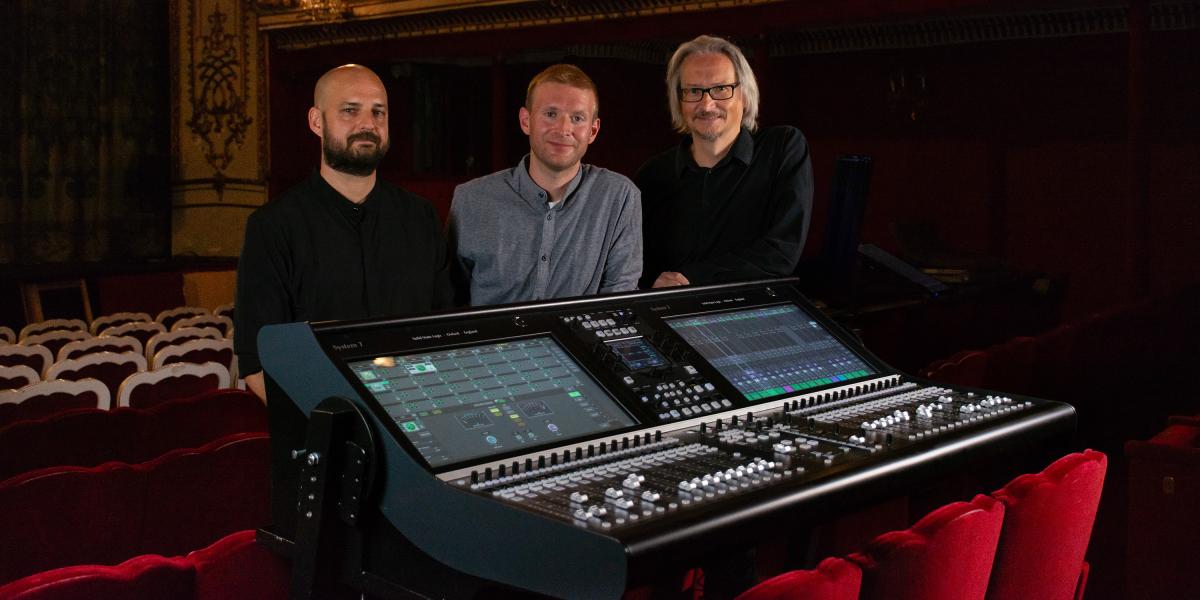
Known locally as Die Josefstadt, the theatre first opened in 1788 and was rebuilt in 1822, with its inaugural performance featuring music conducted by Ludwig van Beethoven. More than two centuries later, it remains one of Vienna’s most celebrated cultural institutions, staging both plays and musical productions. Together with its nearby sister venue, the smaller Kammerspiele, it now forms part of a shared production environment built around SSL’s System T platform.
The Kammerspiele became the first of the two theatres to install an SSL System T in 2024, because of its powerful feature set for theatre production. Raimund Hornich is the Head of the Sound Department for both theatres and moved on to the upgrade for Die Josefstadt after the Kammerspiele installation. “I started in the job three years ago and at that time both places had very old school mixing consoles,” he says. “I had to install a new system with a modern workflow for theatre productions nowadays and SSL provided that.”
Hornich was already familiar with SSL consoles and technologies from his time working at the Burgtheater, Austria’s national theatre, also located in Vienna. Die Burg, as it is called by locals, was the first fixed theatre installation of a System T. That system, like those for Die Josefstadt and Kammerspiele, was supplied by TSAMM Professional Audio, SSL’s distribution partner in Austria. “I quickly realised that System T offered the flexibility, scalability and operational consistency that modern theatre productions demand,” comments TSAMM’s owner, Mario Reithofer. “Vienna has a close-knit theatre community, and once people understood the strength of the platform, interest started growing naturally,” Hornich agrees. Because of what he calls a consistently positive experience with System T at Die Burg, particularly in terms of reliability, audio quality and flexibility for a repertory environment, Hornich says he was keen to have System T as the new audio infrastructure for Die Josefstadt and Kammerspiele. “I was not only looking for a system based purely on specifications,” he explains. “I wanted a platform that was trusted in real-world theatre operation. We knew exactly how it behaved under pressure, how flexible and scalable it was and where its strengths lay.”
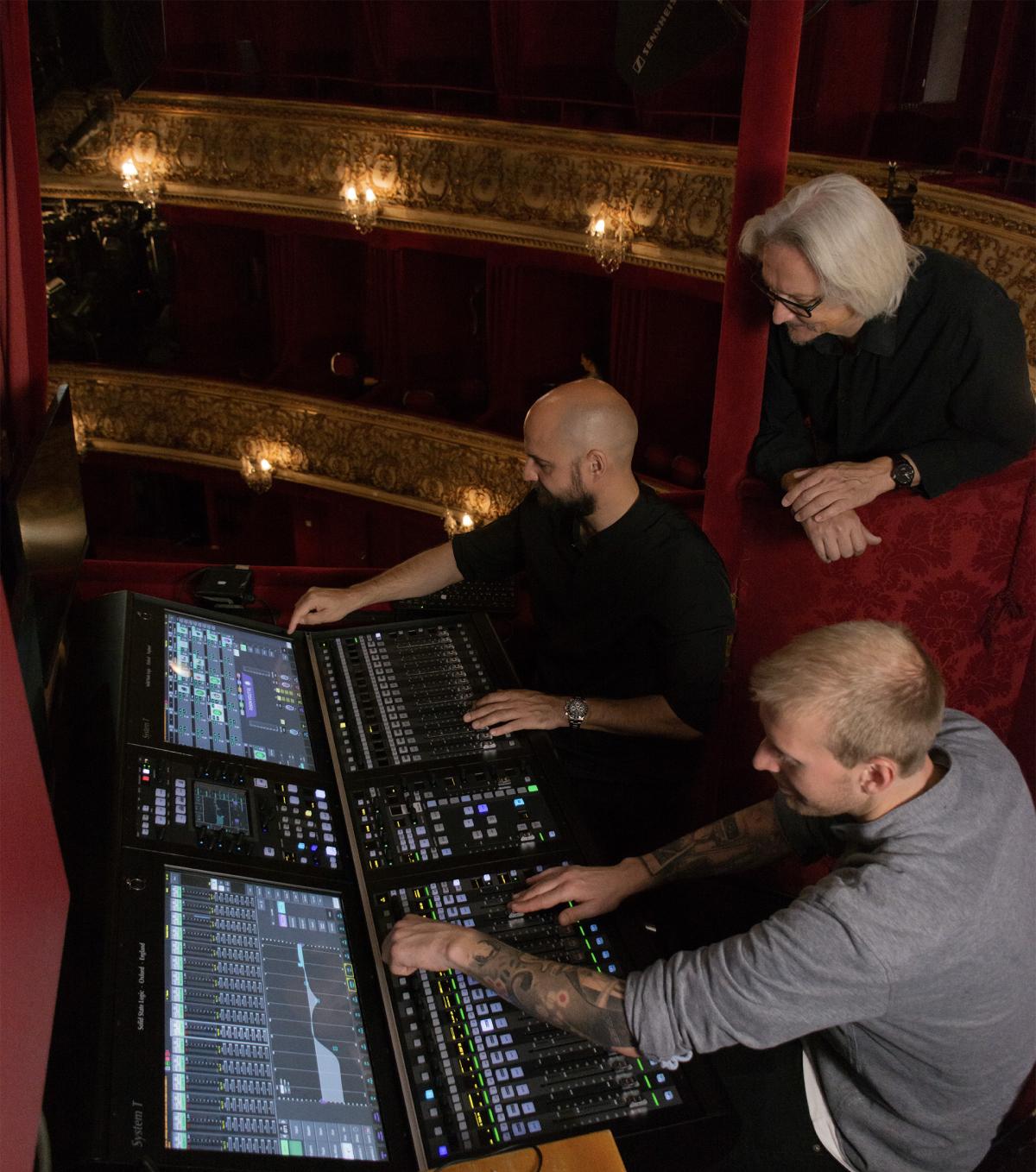
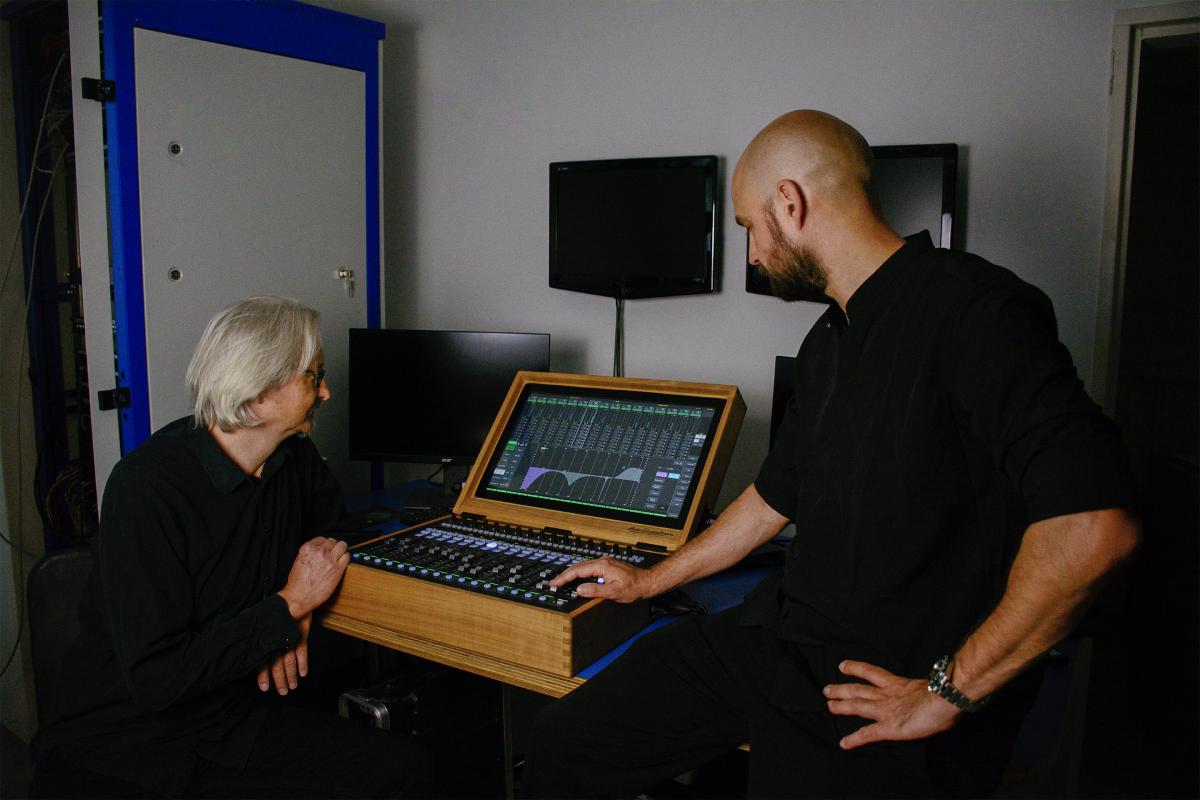
One of Die Josefstadt’s S500 surfaces is permanently installed in its FOH position, while TSAMM built a customised trolley for the second S500 so it can be moved into the auditorium during rehearsals. An additional remote unit with 16-faders is also available to be used anywhere in the theatre. There is a similar arrangement at the Kammerspiele, with its 16-fader S500 in its own custom-made stand on wheels.
“What I particularly appreciate about System T is that it was clearly designed to handle complex production requirements,” Hornich concludes. “Theatre productions are rarely static: shows evolve constantly, requirements change and every production brings its own challenges. In repertory theatre, where productions change daily, flexibility is essential.”